
Ship Grapefruit for the Taste
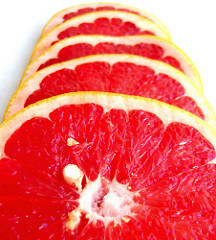
Image by Darwin Bell via Flickr
The grapefruit is one of the newest additions to the citrus family of fruits. It was first documented on the island of Barbados in 1750. Years later, researchers discovered that the fruit had actually originated in Jamaica. A cross between an Indonesian pomelo and a Jamaican sweet orange, the grapefruit is a hybrid fruit. It is also prone to mutation.
The grapefruit was brought to Florida in 1823 by a Spanish count. At the time, all grapefruits were white. Though farmers had high hopes for them, they found it difficult to ship grapefruit in the early years. The fact is Floridians had grown accustomed to the sweet and tangy taste of the orange, which had arrived in the Sunshine State centuries earlier.
By the 1830's, the orange industry was booming and the grapefruit was relegated to the role of novelty fruit. It is during this period that the first grapefruit mutations began to appear. These new varieties of fruit were pink instead of white, but they tasted the same. Not surprisingly, this simple chromatic variation did not help farmers actually ship grapefruit.
It was not until the grapefruit made its way to South Texas that it began to achieve some measure of success. Of course, the first crops were a dismal failure. In fact, most farmers did not ship grapefruit for sale, they simply gave it away. But even though the fruit was free, most of the local fruit lovers were not fans of the white or pink grapefruit. Just as they had in Florida, people found them bitter and sour.
Still, grapefruit farmers continued to experiment with small crops. And by 1920, a few small farms were actually able to ship grapefruit. Mind you, these were incredibly small shipments of only around one hundred tons. Twenty years later, grapefruit production in the Lone Star State peaked at 960,000 tons.
How did this happen? How were farmers finally able to ship grapefruit? The answer to that question is a single, strange word: mutation. As we mentioned, the grapefruit is a fruit that is prone to mutation. And though the pink variety was not a hit, a mutation that grew on a pink tree most certainly was.
Yes, the fruit that gave birth to a massive industry is a simple mutation, a red grapefruit that grew on a pink tree. But the color was not important. It was taste that set this new “Ruby” red grapefruit apart from its predecessors. For not only was it much sweeter than the white or pink grapefruit, but it was also much juicer. Texas currently ships more than half a million tons of red grapefruit each year. Florida might have a lock on other citrus fruits, but Texas grapefruit is in great demand everywhere.

Farm Fresh Gifts Since 1926
For nearly a century, Pittman & Davis has shared the bold, sun-kissed flavors of the Rio Grande Valley and beyond. From tree-ripened citrus to smoked meats, pastries, and handcrafted specialties, every gift reflects the land it comes from, the people who craft it, and the unforgettable taste it delivers.
Shop Now