
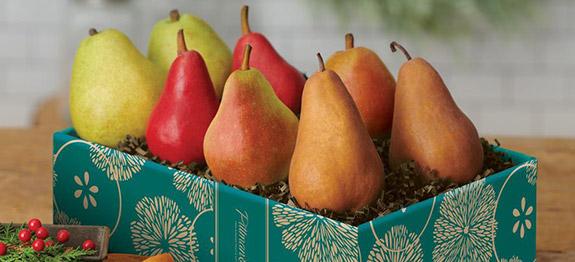
Popular Varieties of the Perfect Pair
With so many different types of pears to use for baking, cooking and just plain snacking, pears are a naturally sweet, tasty and healthful treat. It’s no wonder that, on average, pears are growing in popularity as a wholesome, versatile pantry staple.
It wasn’t that long ago that we’d have to wait patiently for harvest season to enjoy the bounty of pears that appear in markets (which is why orange and pear gifts in one’s Christmas stocking were once considered rare and luxurious treats). But thanks to improved transportation and storage methods, pears are available all year long—somewhere in the world it’s harvest time!
With so many different pear varieties, it’s important to be sure which kinds of pears are best for the type of recipe you’re preparing. For instance, the best pears for baking are those that hold their shape under heat, like the Bosc or Concorde. For a pear honey recipe, pear sauce, or pear butter, you’ll want to choose from the different kinds of pears that fall apart under heat, like the Bartlett.
Here are some popular pear varieties and how they can be used to add health and interest to your diet (and even your décor):
- Asian—firm and crunchy, a great choice in salads or slaws
- Anjou—red or green varieties; firm and juicy, great for baking, grilling, poaching, in salads or raw
- Bartlett—red or yellow varieties; juicy and soft, a striking choice for pear gift baskets
- Bosc—sweet and flavorful, great for baking, popular with artists painting a still life of a pear basket due to its characteristic shape
- Comice—also known as Christmas pears, red or green, very sweet, creamy texture, juicy, beautiful in pear gift baskets
- Concorde—Oregon pear with a dense flesh; sweet and juicy; good for cooking or snacking
- Forelle – moist, crisp flesh; best eaten fresh
- Seckel—small and sweet, great for lunch boxes or pear gift boxes
- Starkrimson—mild and sweet with a subtle floral aroma; smooth texture
- Taylor’s Gold—New Zealand variety with sweet, smooth, juicy flesh; good for making jams, jellies, and sauces
Pear Nutrition Facts
- Fat-free and low in calories—just 100 for a medium-size pear (5-6 oz.)
- High in fiber, which helps aid digestion and promote weight loss
- Fat-free, sodium-free and cholesterol-free
- A natural source of anthocyanin, vitamin C and other antioxidants necessary for bone and tissue health
- Studies have shown that consumption of pears has positive health benefits: pears can reduce the risk of cardiovascular disease, cancer and diabetes and can help improve immune function and lower your risk for infection
Selecting and storing pears
Pick pears that are bruise-free and firm to the touch. Refrigerate pears to slow ripening and maintain freshness and crispness—they’ll last in the fridge from 2-4 weeks. Store them away from strong-smelling foods as they can absorb odors.
To ripen hard pears at home, place them in a punctured paper bag and keep at room temperature until the fruit is aromatic and gives slightly when pressed with your thumb. (NOTE: pears ripen quickly, so use them before they become mushy or mealy.)
To prevent browning: if you’re using fresh, sliced pears in a salad, or cutting them in advance for a fruit platter, coat them with a mixture of three parts water to one-part lemon juice to keep them from turning brown.
Decorating with pears
Pears make beautiful and natural centerpieces on a table, especially when presented in a rustic wooden bowl. Choose pears of different colors to create a seasonal display with shades of red, gold and green.
With so many ways to enjoy this versatile fruit, take advantage of Pittman & Davis’s pear delivery for yourself or your loved ones!
Farm Fresh Gifts Since 1926
For nearly a century, Pittman & Davis has shared the bold, sun-kissed flavors of the Rio Grande Valley and beyond. From tree-ripened citrus to smoked meats, pastries, and handcrafted specialties, every gift reflects the land it comes from, the people who craft it, and the unforgettable taste it delivers.
Shop Now